
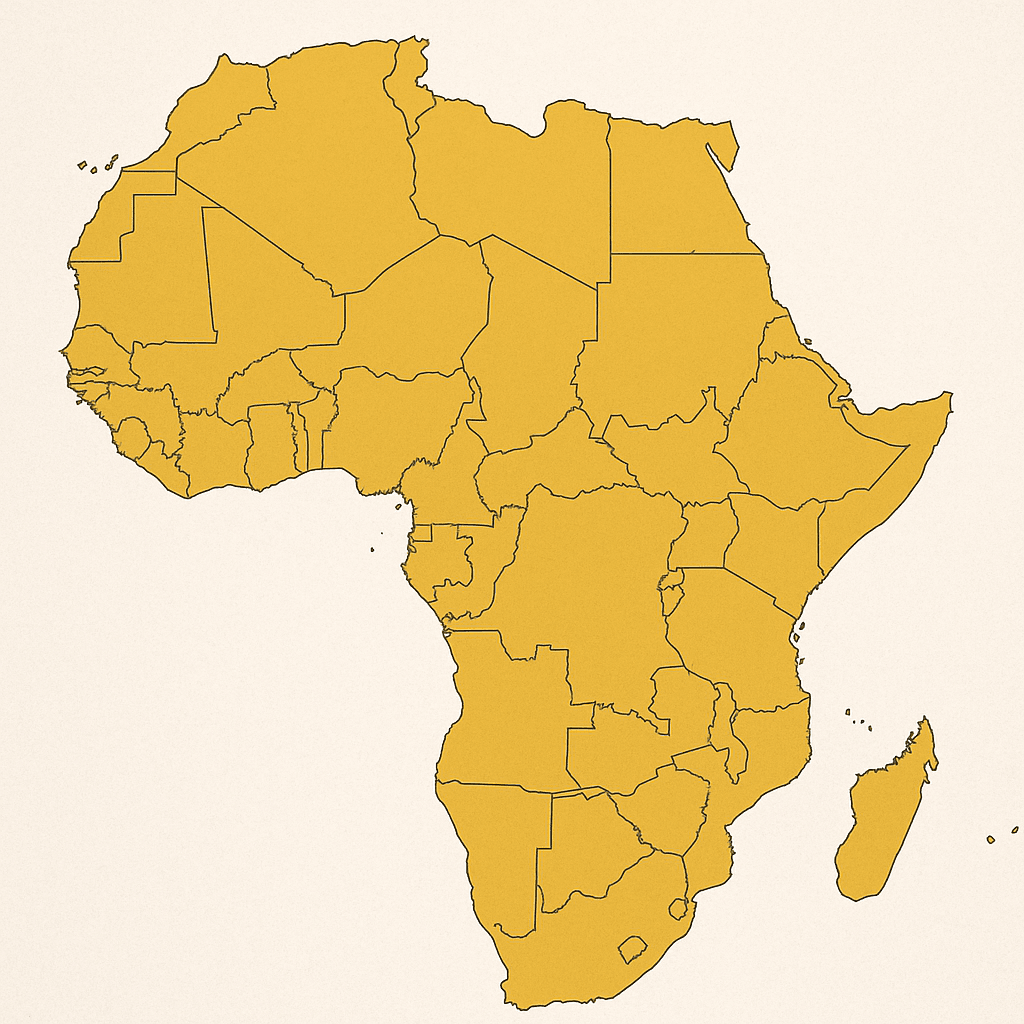
A flagship African Union (AU) agreement designed to mirror the European Union’s Schengen area and allow for the free movement of people across the continent has ground to a halt, a victim of political hesitation and deep-seated practical challenges.
The AU Protocol on Free Movement of Persons, adopted with fanfare in 2018, was envisioned as the cornerstone of a more integrated Africa. Yet six years on, it has been ratified by only four of the 55 member states, leaving the grand continental ambition in limbo.
A new report from the AU itself laments the “low level of human integration,” pointing to persistent hurdles like legal fragmentation, security concerns, and mutual distrust over documents and qualifications.
However, migration researchers argue that this high-level stalemate tells only part of the story. While the top-down approach has faltered, a bottom-up revolution is quietly underway, offering a more practical, if slower, path toward a borderless Africa.
“We cannot afford to allow these obstacles to diminish the effort towards a fully integrated continent,” said Alan Hirsch, a senior research fellow at the New South Institute and co-author of a recent report on the issue. “In a world of large, competing power blocs, Africa’s fragmentation puts it at a huge disadvantage. The good news is that, compared with much of the rest of the world, Africa is mostly opening borders, not closing them.”
A Dream Deferred, Not Abandoned
The vision of a united Africa with seamless borders is not new. It was first formally articulated in the 1991 Abuja Treaty, which laid out a plan for an African economic community. The goal was further enshrined in the African Charter on Human and Peoples’ Rights.
The 2018 Protocol was meant to be the execution of that dream, outlining a phased process from visa-free travel to eventual rights to settle, work, and establish businesses anywhere on the continent. Its stagnation stands in stark contrast to the rapid ratification of the African Continental Free Trade Area (AfCFTA), a parallel initiative to create the world’s largest free trade area.
“The AfCFTA is driven by a relatively large, dedicated secretariat with wide support. The free movement protocol, in practice, is driven by a few busy staffers in Addis Ababa,” noted Victor Amadi, a postdoctoral research fellow at the University of Cape Town and co-author with Hirsch. This disparity in resources and political capital highlights the greater sensitivity surrounding the movement of people compared to goods.
The Quiet Progress on the Ground
Despite the continental logjam, the data shows undeniable, if incremental, progress. According to the African Development Bank’s Visa Openness Index African citizens can now travel without a visa for 28% of their intra-continental trips, up from just 20% in 2016.
This improvement is not coming from a single AU directive, but from a web of **bilateral and regional agreements**. Countries within blocs like the East African Community (EAC) and the Economic Community of West African States (ECOWAS) have made significant strides in allowing freer movement for their citizens.
A Pragmatic Path Forward
With the comprehensive protocol going nowhere, researchers are proposing a more varied and pragmatic approach. Instead of waiting for all 55 nations to agree, they suggest building momentum through targeted, smaller-scale initiatives.
Their recommendations include:
1. “Elitist” Reforms First: Starting with visa-free travel for professionals and skilled workers, a model successfully used in South America. This builds confidence and paves the way for broader rights.
2. Formalizing Informal Trade: Creating specific agreements that bring millions of informal cross-border traders—mostly women—into the formal economy, granting them recognized rights to move.
3. Pilot Programs: Launching regional pilot projects for the mutual recognition of skills, establishing special economic zones with freer movement, or harmonizing visa policies for specific categories like students and traders.
“If successful, these models could be scaled up to encourage broader adoption of the AU protocol,” Hirsch explained. “The key is to demonstrate the benefits tangibly.”
The researchers also stress the need for capacity building, noting that countries with weaker institutions for issuing passports or managing borders must not be left behind. Technical and financial assistance will be crucial to ensure that integration does not become a privilege for the more developed nations.
The grand dream of a borderless Africa, as envisioned by its founders, remains distant. But the journey there is now being mapped not in the halls of the AU headquarters, but through countless agreements between neighboring capitals and regional communities, suggesting that the continent may yet achieve integration one step at a time.