
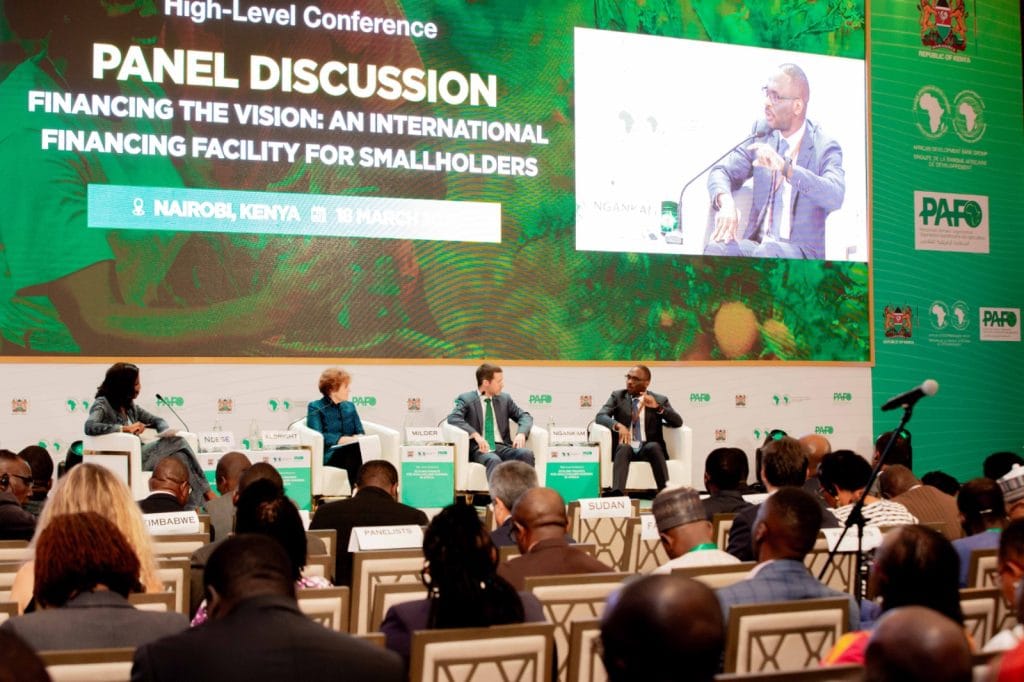
At a two-day conference in Nairobi, Kenya, focused on financing Africa’s agricultural sector, experts stressed the critical role of government intervention in creating an environment conducive to increased agricultural lending by financial institutions.
This conference marks a pivotal moment in the effort to mobilize the billions of dollars needed annually to support Africa’s smallholder farmers, who, despite representing 80% of the continent’s farming population, control less than 5% of agricultural land.
Bridging the Financing Gap:
Dr. Akinwumi Adesina, President of the African Development Bank Group, delivered the keynote address, highlighting a stark disparity: while agriculture contributes 30% to Africa’s GDP, it receives only 6% of commercial bank lending. “Smallholder farmers around the world are the same, except those from Africa face difficult odds—poor access to markets, finance, information, infrastructure, and inputs—none of which we can’t address collectively,” Adesina stated.
Addressing Barriers to Financing:
A crucial panel discussion featuring Alice Albright, former CEO of the Millennium Challenge Corporation (MCC); Brian Milder, Founder and CEO of Aceli Africa; and Jules Ngankam, Group CEO of the African Guarantee Fund, explored practical solutions to bridge the agricultural financing gap.
Panelists identified key barriers, including:
- Risk misperceptions in agricultural lending.
- High transaction costs for rural financial services.
- Mismatches between standard loan products and agricultural business cycles.
- Lack of formal financial records and collateral.
- Inequitable value chain structures limiting farmer profitability.
Strategies for Sustainable Financing:
Milder shared a success story from Tanzania, demonstrating how targeted interventions can significantly increase agricultural lending. He also highlighted the need to make agricultural finance more attractive to investors, given the low average returns compared to other investment options.
Albright emphasized the importance of defining financing challenges, assessing risks, and building political will. “We must articulate the public policy rationale for financing smallholder farmers and address key design challenges, including risk management and cost efficiency,” she stated.
Ngankam stressed the need for tailored financial products that align with different agricultural value chains and business cycles.