
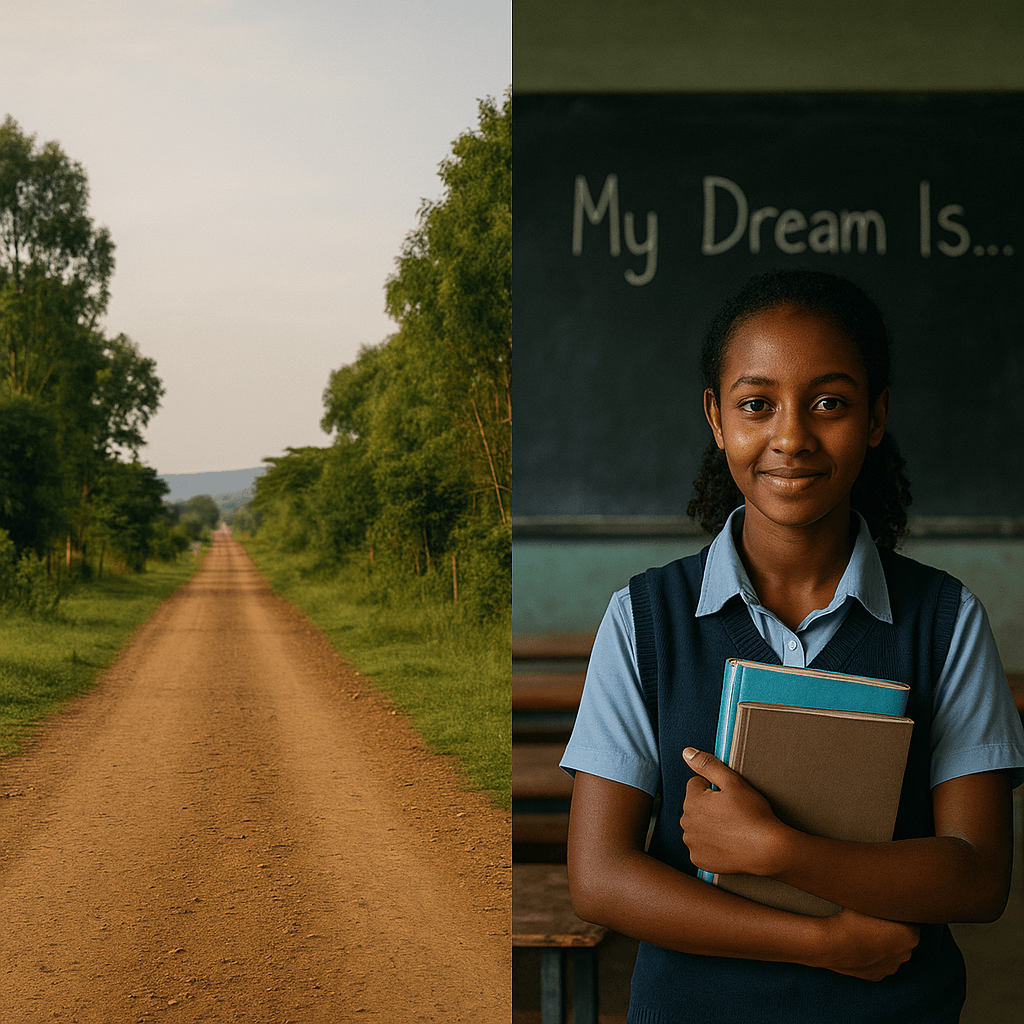
For many, it is the defining moment of their academic journey, a one single score that determines access to higher education and, for some, the future of their dreams. But behind the exam papers and pencils are real human stories.
Students from remote villages waking up at dawn to walk long distances to class. Teens studying under candlelight during power cuts. Youth battling anxiety, self-doubt, and the pressure of expectations from family, teachers, and society.
In recent conversations with high school students, many echoed the same thing: they feel unseen. Their hopes go beyond test results. They want skills, guidance, opportunities, and a chance to shape their future with confidence, not just only pass a test. So perhaps the question is not how can we help students pass the national exam, but rather: how can we better prepare students for life after the exam?
We need spaces where students feel supported beyond academics — spaces where they connect with role models, share their fears, and learn about emotional resilience, digital skills, ethics, financial literacy, or mental wellness. Spaces where faith, mentorship, and community strengthen their sense of purpose and possibility.
As Ethiopia and pretty sure many other countries work to reform education, we must remember that the transition from high school to higher education is not just academic. It is deeply personal, social, and emotional. This year, thousands of students will take the leap. What if we, as educators, parents, mentors, or just fellow citizens, showed up not just to test them, but to support them holistically? Because beyond the exam, what they really need is someone who sees them not as a score, but as a story still being written.
Written by Tigu Demeke (UPG Champion 2025) as part of her journey with the UPG Sustainability Leadership program.