
Starvation Rations, Collapsing Services
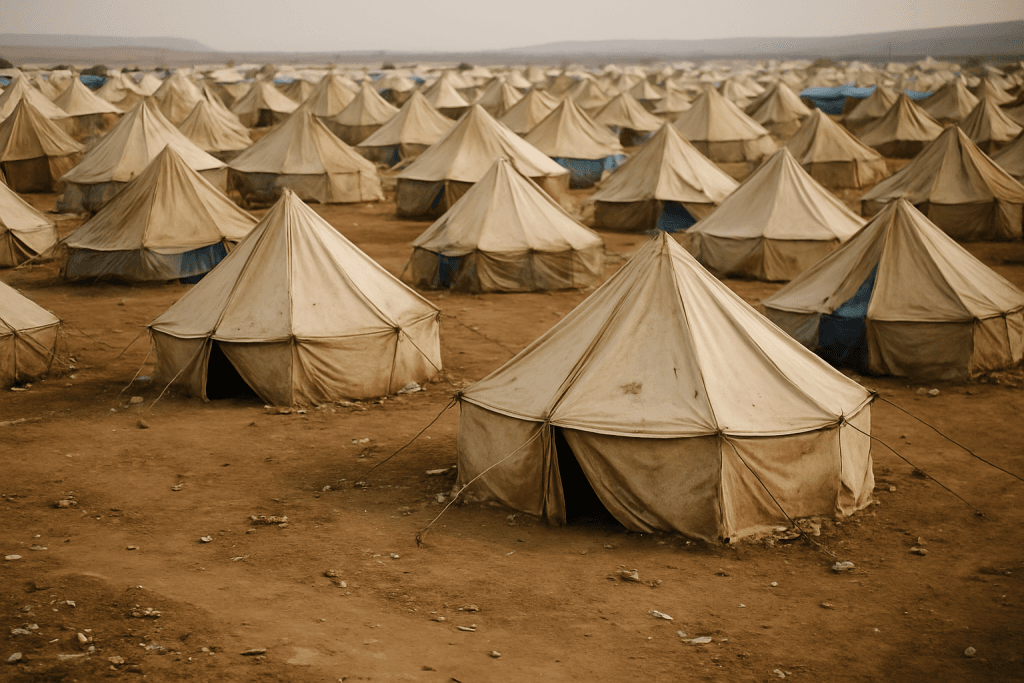
Located near the South Sudanese border, Gambella hosts over 395,000 refugees, primarily South Sudanese who fled conflict since 2014. Severe global aid cuts, including reductions from major donors like USAID, have slashed essential services. Refugees now receive as little as 600 calories per day – less than 30% of the minimum requirement – with food distributions frequently interrupted for months.
“Since last year, there has been a big decline. Some of the items we used to get are no longer provided at all,” said Nyauahial Puoch, a mother who walked 8km from Tierkidi camp to seek treatment for her malnourished 17-month-old daughter at MSF’s Kule camp facility. Nutrition services have been suspended in four of the region’s seven camps, leaving 80,000 children under five at severe risk.
Health System Overwhelmed
The funding crisis has forced numerous NGOs to withdraw, collapsing local health services. MSF reports a 55% increase in child admissions to its therapeutic feeding center in 2025 compared to 2024, with half arriving from other camps. Outpatient visits at MSF’s Kule clinic have surged 58%, and antenatal care attendance has jumped 72%, overwhelming remaining capacity.
“We walked three hours from Akula camp,” said Kuoth, whose 1-year-old child required 15 days of hospitalization for severe malnutrition and illness at MSF’s Kule hospital. “We’re receiving more patients from other camps largely because these services are no longer available locally,” stated Armand Dirks, MSF’s Gambella project coordinator. “MSF is overwhelmed… we fear this number will keep rising.”
Malaria Epidemic Looms
Preventative health programs have been decimated. With malaria endemic and peak rainy season underway (May-October), cases at MSF facilities soared 125% from June to July 2025. MSF has treated over 23,800 malaria cases this year, half from other camps. Critical prevention measures – bed net distribution, spraying, and healthcare access – have been drastically scaled back.
“Cases are expected to rise sharply. This poses a serious threat to vulnerable refugees facing overcrowded conditions and limited sanitation,” warned Birhanu Sahile, MSF’s deputy medical coordinator. In response, MSF is boosting treatment, distributing bed nets in Kule, and establishing a dedicated malaria health post in Tierkidi camp (population 74,000+).
Urgent Call for Action and Integration
MSF paints a bleak picture of abandoned NGO facilities and vanished services. While providing critical healthcare, water, sanitation, nutrition, and mental health support in Kule, the organization stressed its limitations. “The scale of needs… far exceeds what we can address alone,” said Birhanu. “Without urgent support… this crisis will escalate, putting thousands at greater risk.”
MSF issued a direct appeal: “We urge the Government of Ethiopia to take clear and decisive steps in Gambella to advance refugee integration into local services,” Dirks emphasized. This includes strengthening the regional healthcare system for *all* residents and building resilience against future funding shocks, as the current model reliant solely on dwindling international aid proves fatally unsustainable. The visible emptiness of former NGO compounds starkly underscores the vacuum left by retreating global support.