
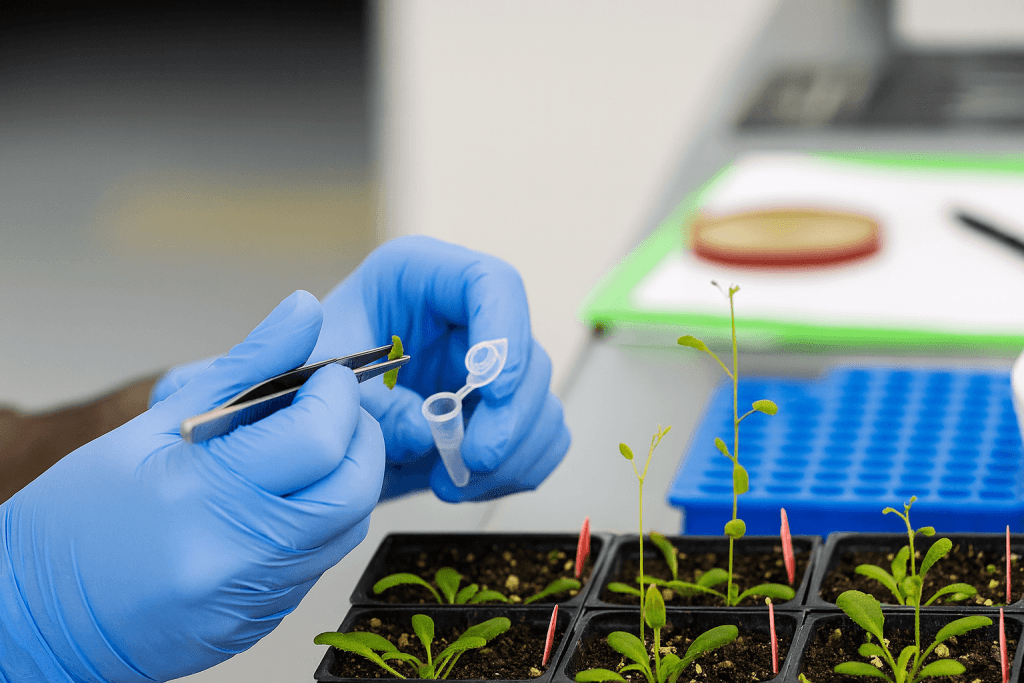
The revelation was made by Daniel Willy, Senior Manager for Policy, Agribusiness, and Commercialisation at the African Agricultural Technology Foundation (AATF), who identified biotechnology as a critical scientific tool for improving crop yields and enhancing food security across the continent.
Willy spoke on the sidelines of the ongoing World Congress of the International Federation of Agricultural Journalists (IFAJ) being held in Kenya.
“Biotechnology remains one of the key scientific tools for improving crop varieties and enhancing food production,” Willy stated. He explained that the technology can be used to help crops protect themselves from pests, as seen in Bt maize, which resists destructive insects like stem borers and fall armyworm.
“By doing so, farmers are able to reduce yield losses associated with pest attacks,” he said.
The AATF official highlighted the broader applications of the technology, noting its use in fortifying crops with essential nutrients. He cited the example of vitamin A-enriched maize, developed to address nutritional deficiencies. Biotechnology has also been used to improve the shelf life of perishable produce like tomatoes.
“Therefore, biotechnology is one tool among many in agriculture that can help farmers improve yields, which directly contributes to food security,” Willy added.
Despite the potential, Willy lamented that the progress of biotechnology adoption in Africa has been severely hampered by widespread misinformation and conspiracy theories about its health effects.
“Such misconceptions have hindered the commercialisation of biotechnology crops,” he said. “That need not be the case because, by delaying, we are losing a lot as a continent.”
Pointing to successes elsewhere, Willy highlighted Nigeria’s commercialisation of Pod Borer Resistant Cowpea, a major milestone that protects the crop from the devastating maruca pest. He also noted that biotech maize has been successfully commercialised in Nigeria and South Africa, with countries like Ethiopia, Kenya, and Mozambique now preparing to follow suit.
The AATF, he said, has been instrumental in developing numerous hybrid crop varieties through African scientists since the 1970s. These innovations are expanding Africa’s potential for food production while helping farmers mitigate the impacts of drought, pests, and diseases.