
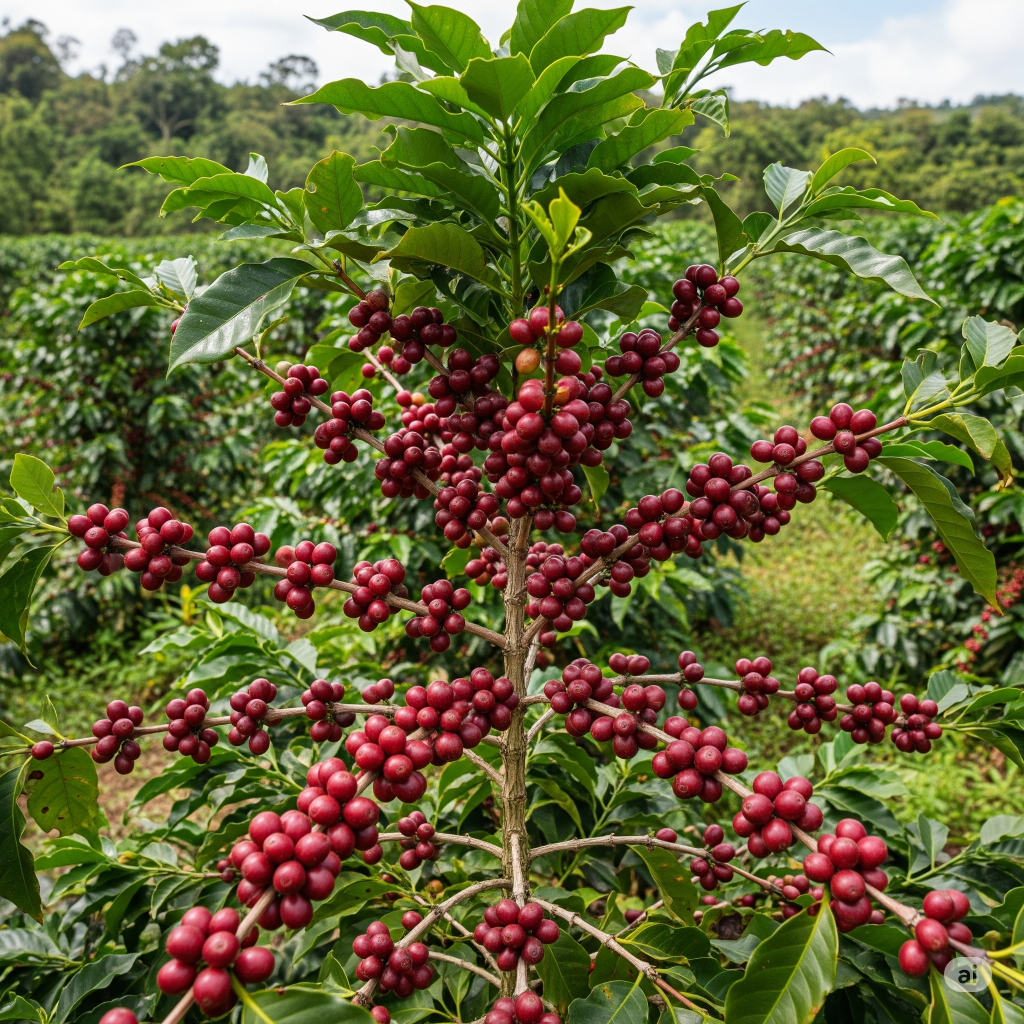
This projected 9% increase from the previous year underscores the success of nationwide efforts to modernize the sector and capitalize on growing global demand for premium arabica beans.
The anticipated boom stems from a combination of favorable weather conditions and ambitious agricultural reforms. Over the past five years, Ethiopia has rejuvenated more than 450,000 hectares of aging coffee trees through systematic stumping programs, while distributing improved seedlings and fertilizers to smallholder farmers.
These efforts, coupled with specialized training initiatives, have pushed average yields to 0.88 metric tons per hectare – a significant improvement for a country where coffee farming remains largely traditional.
On the trade front, recent policy changes are reshaping Ethiopia’s export landscape. The government has relaxed long standing restrictions, allowing more producers to export directly and permitting foreign investors to participate in raw coffee exports.
These reforms appear to be paying dividends: shipments surged 44% in volume during 2023/24 to 5.63 million bags, generating $1.7 billion in revenue. The USDA projects exports will climb another 11.4% to 7.8 million bags in the coming season, with Germany, Saudi Arabia, and Belgium remaining top buyers.
The United States accounts for about 7% of shipments, while value-added roasted coffee exports have tripled to over 27,000 bags – a promising sign for Ethiopia’s industrialization goals.
Domestic consumption continues to grow in parallel, forecast to reach 3.7 million bags as urbanization and a thriving café culture drive demand. With per capita consumption at 2.3 kilograms annually, local markets are increasingly competing with exporters for high-quality beans, creating a rare dynamic where domestic prices track closely with international benchmarks.
Global market conditions have further boosted Ethiopia’s prospects. Benchmark arabica prices on the “C” market jumped from 216 to 400.75 cents per pound between mid-2024 and April 2025 due to production shortfalls in Brazil and Vietnam. Ethiopia’s weekly minimum export price mechanism has helped local farmers capture these gains, with export prices reaching 423 cents per pound this spring.
However, challenges loom on the horizon. The report notes vulnerability to climate shocks in a country where most coffee grows without irrigation. The potential impact of the European Union’s new deforestation regulations (EUDR) remains unclear but could impose additional burdens on small-scale producers. Political stability also remains a concern after past conflicts disrupted supply chains.
Under its Comprehensive Coffee Development Strategy (2019-2033), Ethiopia aims to become the world’s second-largest coffee exporter by 2033, targeting $4 billion in annual export revenue. With ending stocks forecast to nearly double to 140,000 bags and institutional reforms gaining momentum – including shifting export permitting to commercial banks – the sector appears positioned for sustained growth.
As global consumers increasingly seek out Ethiopia’s distinctive heirloom varieties, the country’s centuries-old coffee tradition is entering a transformative new era.