
Ethiopia, a Country on the Frontlines:
Ethiopia is a key case study highlighted in the World Bank’s “Africa’s Pulse” report. The country is actively seeking debt relief through the Common Framework initiative, a G20-led program designed to help nations facing unsustainable debt burdens. Ethiopia’s participation reflects a broader trend across Sub-Saharan Africa.
Debt Levels Remain High:
Despite the projected decrease, the region’s overall debt situation is concerning. Between 2012 and 2019, the median public debt-to-GDP ratio in Sub-Saharan Africa tripled, excluding the impact of COVID-19. This rapid increase has adversely affected fiscal space and increased vulnerability to economic shocks.
Shifting Creditors Complicate Restructuring:
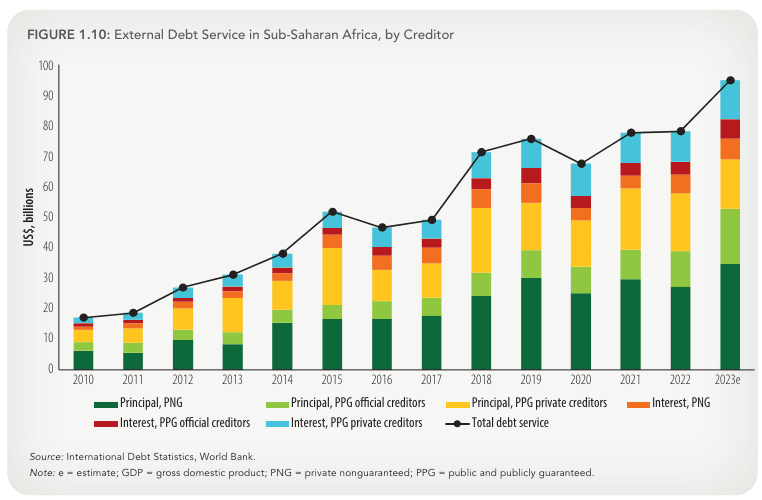
The report also identifies a shift in the composition of Sub-Saharan Africa’s public debt. Traditionally, bilateral creditors held a larger share. However, in recent years, there’s been a move towards private creditors and non-Paris Club governments. This shift complicates debt restructuring negotiations as these creditors often have different terms and conditions compared to bilateral lenders.
Debt Service Burden Weighs Heavy:
Rising debt service levels are another major concern. Increased reliance on market financing and non-concessional loans has led to a significant increase in debt service payments, further straining resources for many African nations.
Limited Access to External Funds:
The report underscores the limited access to external funds faced by Sub-Saharan Africa. This hampers the region’s ability to finance development projects and fuels reliance on debt.
Over Half Face Debt Challenges:
The World Bank report reveals a worrying statistic – more than half of African countries are struggling with unsustainable debt levels or are actively seeking debt restructuring.
The Road to Long-Term Stability:
The challenges facing Sub-Saharan Africa are complex. Addressing the shift in creditors, managing debt service burdens, and finding alternative sources of financing will be crucial for achieving long-term financial stability in the region. Ethiopia’s participation in the Common Framework is a positive step, but more work is needed to ensure a sustainable future for the continent.